

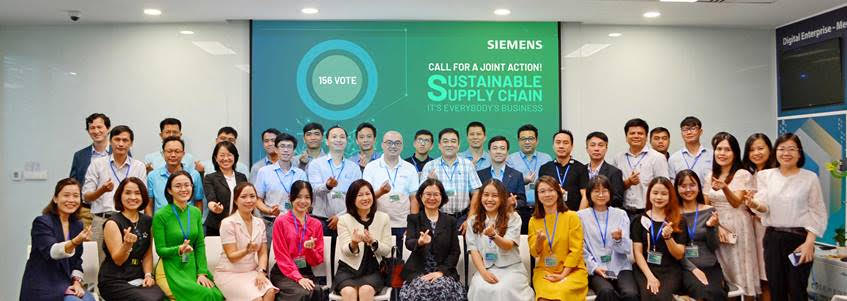
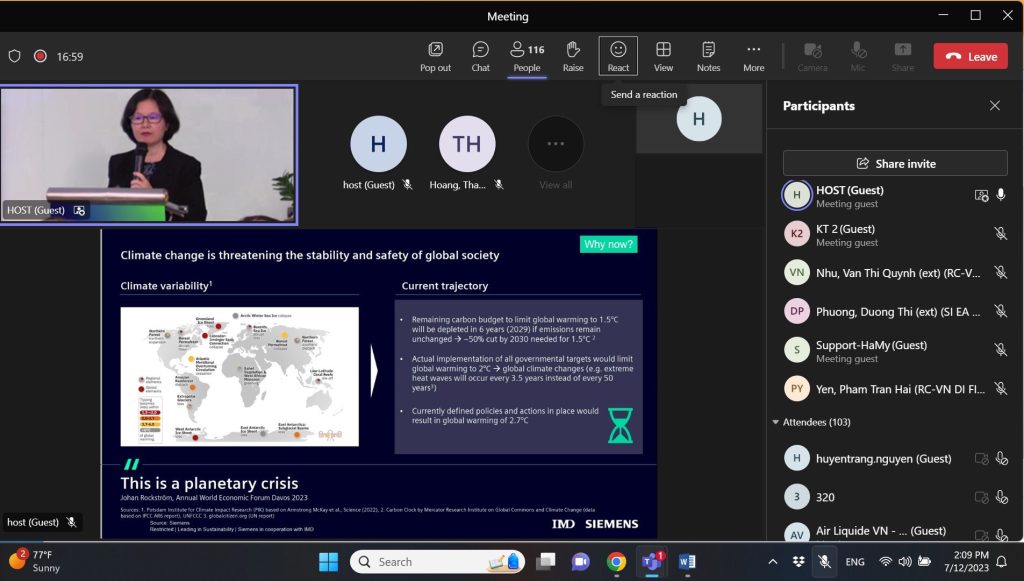
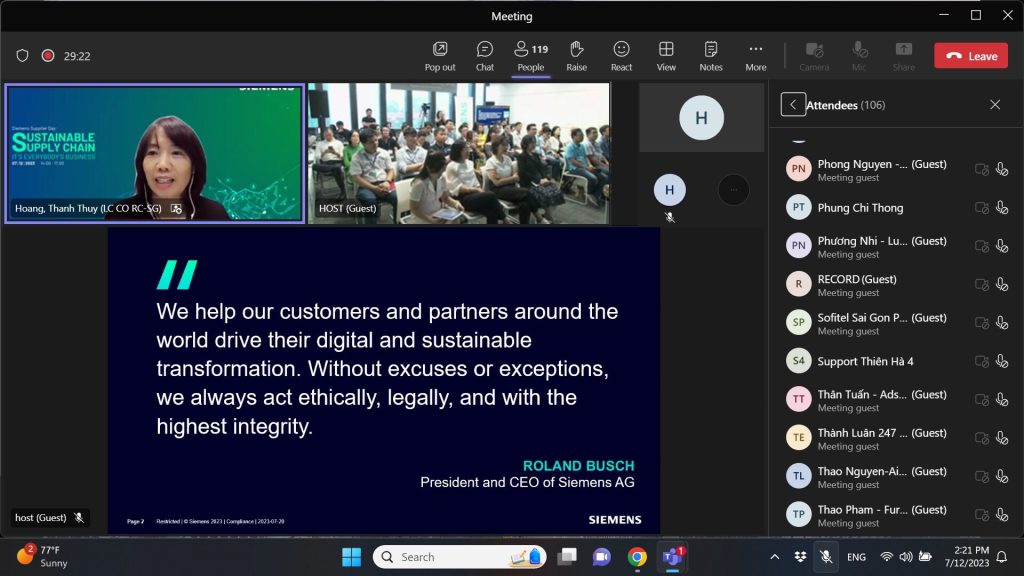
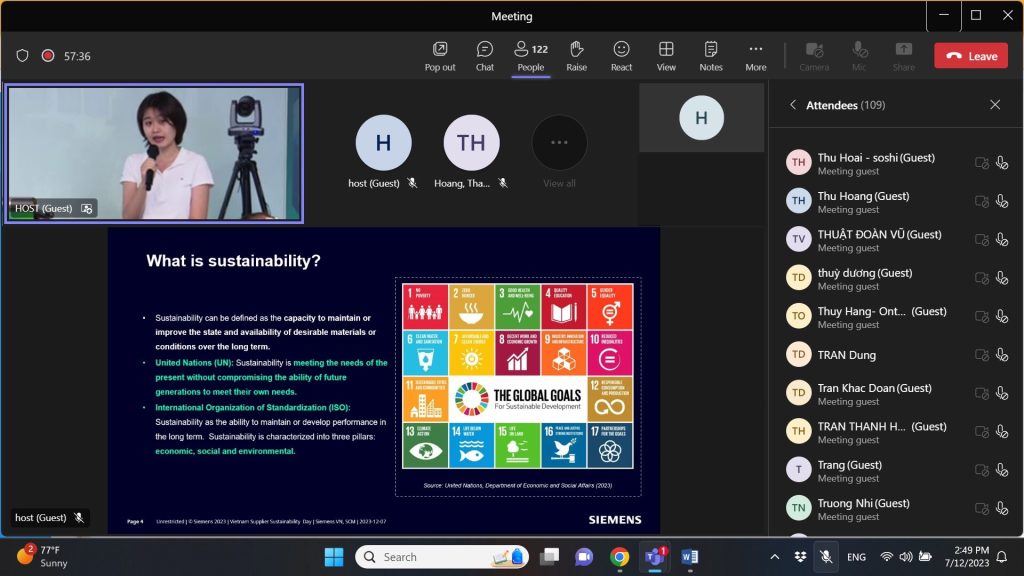
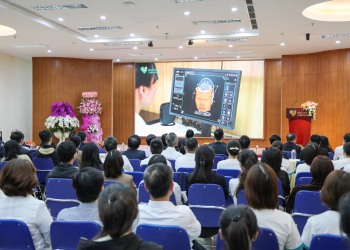
The event was organized in the afternoon of December 7, 2023 at Siemens Headquarter at HCMC, combined online via MS Teams. Along with 156 Siemens suppliers nationwide, Mimosa Team attended the event. Everyone joined hands to vote for accompanying Siemens in implementing a Sustainable Supply Chain in Vietnam.
According to United Nations (UN), sustainability is meeting the needs of the present without compromising the ability of future generations to meet their own needs.
Sustainability model from SDG to ESG to DEGREE at Siemens:
- 17 SDGs are global goals set out by the United Nations in 2015 as a universal call to action to end poverty, protect the planet, and ensure that by 2030 all people enjoy peace and prosperity.
- Translating 17 into business world, ESG was born. ESG is a rating system used by companies to measure their environmental, social, and governance credentials.
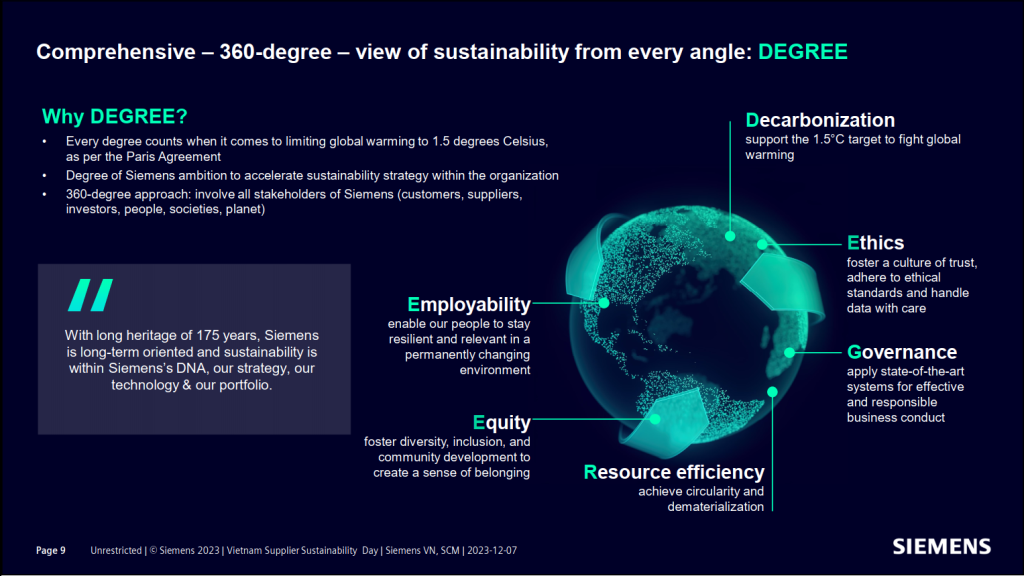
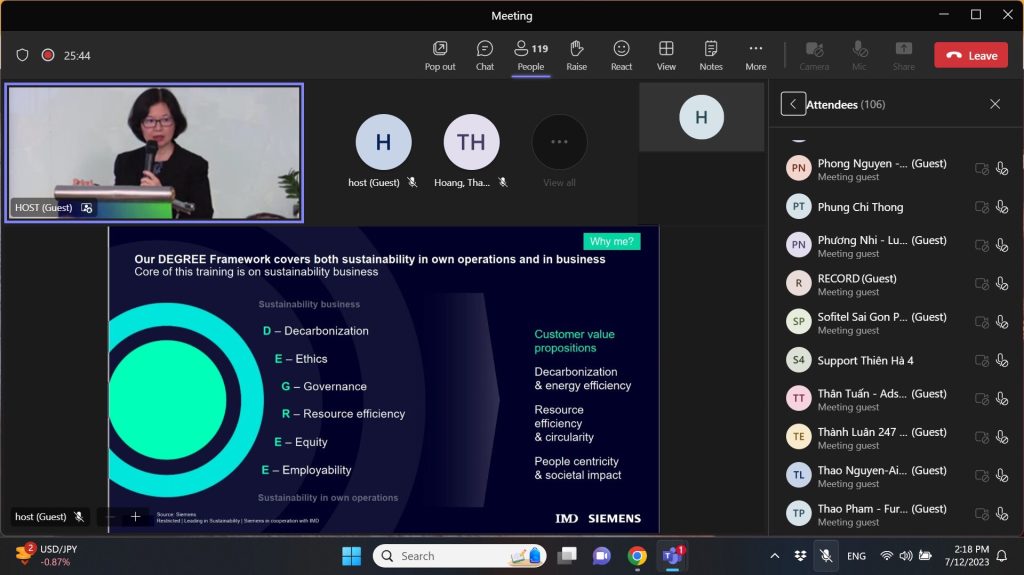
- In 2021, Siemens launched DEGREE, taking our ESG commitment to the next level: Decarbornization, Ethics, Governance, Resource Efficiency, Equity, Employability.
The three emissions are defined as follows:
- Scope 1 emissions
These are “direct” emissions – those that a company causes by operating the things that it owns or controls. These can be a result of running machinery to make products, driving vehicles, or just heating buildings and powering computers. - Scope 2 emissions
These are “indirect” emissions created by the production of the energy that an organization buys. Installing solar panels or sourcing renewable energy rather than using electricity generated using fossil fuels would cut a company’s Scope 2 emissions. - Scope 3 emissions
These are also indirect emissions – meaning those not produced by the company itself – but they differ from Scope 2 as they cover those produced by customers using the company’s products or those produced by suppliersmaking products that the company uses.
“Scope 3 emissions are nearly always the big one,” says Deloitte, adding that it often accounts for more than 70% of a business’ carbon footprint. Companies can normally easily measure their Scope 1 and 2 emissions and can control them by taking steps like switching to renewable energy or electric vehicles. But Scope 3 emissions are under the control of suppliers or customers, so they are affected by decisions made outside the company.
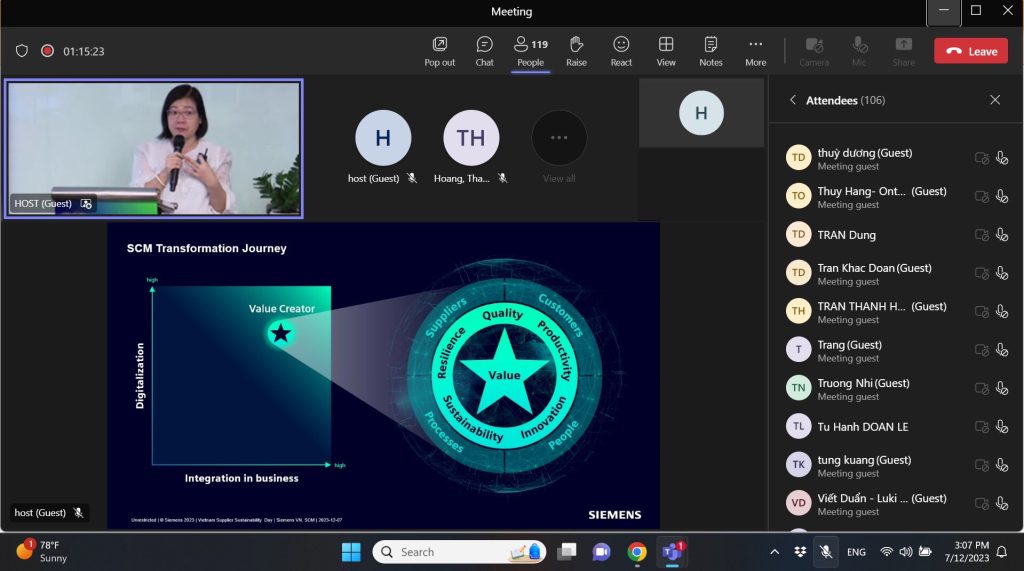
With nearly 3 hours of sharing on the above topics, Siemens hopes that the suppliers in Vietnam will join hands in its mission and commitment to sustainable development.




Discussion about this post